




The Protein Reset:
Breakthrough
That Turns Effort
Into Results
Written by: JAY BELL, SVP MKTG AND R&D, PERFECT SPORTS
The effects of protein timing has been debated for years, yet many people still struggle to see meaningful changes in body composition; even when they are eating enough protein and training consistently.
If that sounds familiar, the problem is not a lack of effort or discipline. More often, it’s a misunderstanding of how the body decides where nutrients go once you eat them. It’s not your genetics and it’s not your fault.
Protein does not automatically build muscle or prevent fat gain. The outcome depends on the physiological state of the body at the moment nutrients arrive. When timing, spacing, and training demand are aligned, the same foods can produce dramatically different results.
The protein reset explains why so many, despite the best of intentions fail, and exactly how you can take real, actionable steps to get into the best shape of your life.
Disclaimer: This article is for informational purposes only and should not be used to treat or diagnose any condition. It is recommended that you speak with your doctor before starting any exercise program, making changes to your nutrition plan, or adding any new supplements into your current regimen.
Table of Contents
Key Takeaways
- Eating enough protein is necessary, but results depend on when and how that protein is consumed, not total intake alone.
- The body directs nutrients based on insulin receptor sensitivity, which changes in response to training, feeding frequency, and energy demand.
- Resistance training, HIIT, and cardio create the demand that tells the body to send nutrients toward lean muscle tissue instead of fat storage.
- 4 hours between protein-rich meals gives the body time to reset and become receptive again, improving nutrient partitioning.
- Hunger is a natural signal, not a problem to suppress; it often indicates falling insulin levels and readiness to use nutrients effectively.
- Consuming high-quality, rapidly absorbed protein at optimally timed meals amplifies muscle protein synthesis and reduces nutrient spillover to fat.
- Constant feeding without sufficient training or spacing can blunt insulin sensitivity, making even “clean” diets less effective over time.
- Aligning training, meal spacing, hunger awareness, and protein quality turns effort into predictable results, even if nothing else has worked before.

Why “Just Eat More Protein” Hasn’t Worked
Protein has earned its reputation as a foundational nutrient. It supports muscle repair, preserves lean tissue during weight loss, and improves satiety. But protein alone does not guarantee progress.
Many people follow high-protein diets, eat frequently, and train regularly, yet still experience stalled fat loss or limited muscle gain. The missing piece is not quantity. It is how the body is primed to receive nutrients.
Effort wasn’t the problem. Timing was.
The body directs nutrients toward the tissues that are most receptive at that time. This is why two people can eat the same meal and experience very different outcomes.
Understanding and influencing that receptiveness is the key to protein timing.
The Stuart Phillips Protein Timing Model
Much of what we know about protein metabolism and muscle protein synthesis comes from the brilliant and insightful research by Stuart Phillips at McMaster University.
His work shows that protein functions not just as a building material, but as a metabolic signal. That signal is shaped by three interdependent factors.
1. Protein Quality
Collagen is a protein, but extremely low in essential aminos and specifically leucine. (It’s great for joints and skin, but terrible for building muscle.)
Modern protein research uses the Digestible Indispensable Amino Acid Score (DIAAS) to evaluate protein quality. Unlike older scoring systems, DIAAS measures how many essential amino acids are actually absorbed and available to muscle tissue.
Proteins with higher DIAAS scores (such as whey and dairy-based isolates) deliver a stronger anabolic signal per gram consumed, largely because they provide essential amino acids (especially leucine) in a more bioavailable form.
2. Protein Dose
Whey protein has over 2.5g of leucine in one serving.
3. Protein Timing and Distribution
This is where most people go wrong.
Protein timing is not about chasing a narrow post-workout window. It is about spacing protein feedings so the body can respond effectively to each one.
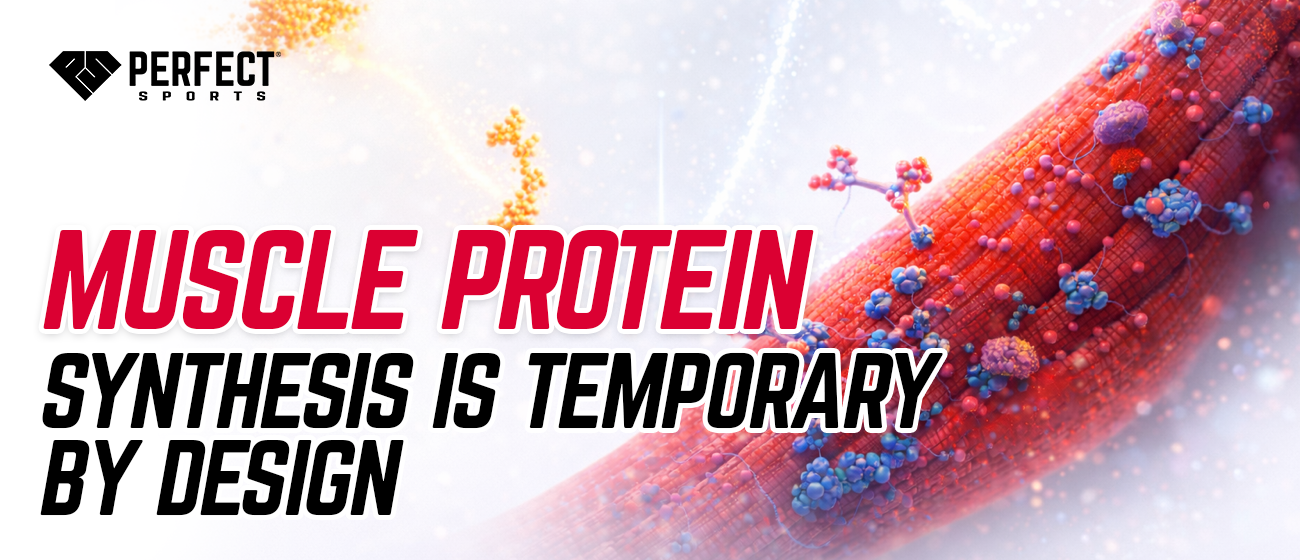
Muscle Protein Synthesis Is Temporary by Design
After a protein-containing meal, muscle protein synthesis rises, peaks, and then falls back toward baseline, even if amino acids remain elevated in the bloodstream.
This decline is not a failure of protein. It is a protective feature of human physiology.
Muscle tissue becomes temporarily less responsive to additional stimulation. This period is known as the refractory period. This is simply a way of describing that the stimulating signal is no longer there.
You can’t stack protein signals back-to-back and expect continuous results. The system has to reset.
In practical terms, it means you cannot stack protein signals back-to-back and expect continuous growth. The system must reset before it can respond optimally again.
Research consistently shows that this reset requires time, typically three to five hours between meaningful protein feedings.


Why Your Body “Doesn’t Care” About Muscle
The body is not primarily concerned with building muscle. Its first priority is survival. That means maintaining the function of critical organs like the brain, heart, lungs, liver, and immune system.
Muscle is much lower on that list. From a biological perspective, muscle is metabolically expensive.
This is where protein quality (and leucine in particular) becomes critical.
Leucine acts as a metabolic signal, not just a building block. When leucine levels in the bloodstream rise rapidly and reach a sufficient threshold, it sends a clear message to the body:
The body doesn’t care about building muscle until survival needs are covered.
In other words, leucine helps tell the body that it’s “okay” to build muscle.
Research consistently shows that muscle protein synthesis is triggered only when leucine reaches a high enough concentration within a relatively short period of time. This is why the rate of digestion matters, not just total protein intake.
Faster-digesting proteins (particularly whey protein isolate) deliver leucine quickly and efficiently, making them far more effective for triggering muscle protein synthesis.
This is Where Execution Often Breaks Down in the Real World
In theory, whole foods can absolutely provide enough protein and leucine. In practice, consistently reaching the leucine threshold at each meal, especially when appetite is low, time is limited, or meals are irregular, is harder than it sounds.
This is why many people use a high-quality whey protein isolate strategically. Not as a replacement for food, but as a way to reliably deliver a fast leucine signal when precision matters. When protein intake is inconsistent, the signal becomes inconsistent too, and so do the results.
Take decision fatigue out of the equation. Be prepared with easy to consume protein sources that are ready to go when you aren’t.
For most active adults, this leucine threshold is reached with approximately 2.5–3 grams of leucine per meal. This becomes even more important with age, as muscle tissue becomes less sensitive to amino acids over time.
When protein is delivered in this way, adequate dose, rapid leucine availability, and proper timing, it stops being just nutrition and becomes a clear instruction: maintain critical functions first, then invest in lean muscle tissue.

Why Protein Timing Matters for Fat Loss
The refractory period is often discussed only in the context of muscle building, but it plays an equally important role in fat storage.
Frequent feeding keeps insulin levels elevated. Chronically elevated insulin reduces receptor sensitivity and blunts the body’s ability to direct nutrients toward productive tissue. In this state, incoming energy is more likely to be stored rather than used for repair or recovery.
Constant feeding blunts results; even with clean food.
This is not a problem of meal size; it’s a problem of feeding frequency. Small, repeated protein doses prevent insulin from fully falling and stop the system from resetting.
Allowing adequate space between protein-rich meals lets insulin levels decline, and receptor sensitivity recover. When the next meal arrives, nutrients are far more likely to be directed toward lean tissue instead of stored as fat.
Insulin Receptors Decide Where Nutrients Go.
Insulin receptors are found in:
- Muscle tissue
- Liver
- Brain
- Adipose tissue
Their sensitivity is not fixed. It changes based on training, feeding patterns, and overall energy demand.
The body directs nutrients toward the tissues that are most receptive at the moment food arrives. This explains why the same meal can support muscle repair in one context and contribute to fat storage in another.
Insulin as a “Traffic Cop”
Insulin is often misunderstood. Rather than being “good” or “bad,” it functions more like a traffic controller, directing nutrients toward the tissues that are most receptive at the moment food arrives.
After training, muscle tissue displays a higher sensitivity to insulin than fat tissue, increasing the likelihood that incoming amino acids are directed toward repair and recovery rather than storage. This is why protein timing works best when paired with training demand.
Training is the Permission Slip
Resistance training creates the physiological demand that tells the body muscle tissue is required. Without that signal, protein is used primarily for maintenance or energy, not construction.
Research shows that a single training session increases muscle sensitivity to protein for at least 24 hours, and in some cases up to 48 hours. Protein intake works best when it follows this signal, not when it tries to replace it.


Training Creates the Demand That Directs Nutrients
Resistance training, HIIT, and cardiovascular exercise do far more than burn calories.
Training:
- Increases insulin sensitivity in muscle tissue
- Upregulates amino acid transporters
- Expands glycogen and protein storage capacity
- Signals the need for repair and rebuilding
In simple terms, training tells the body where nutrients should go.
Protein without training has limited effect. Training without protein produces incomplete adaptation. The two are designed to work together.
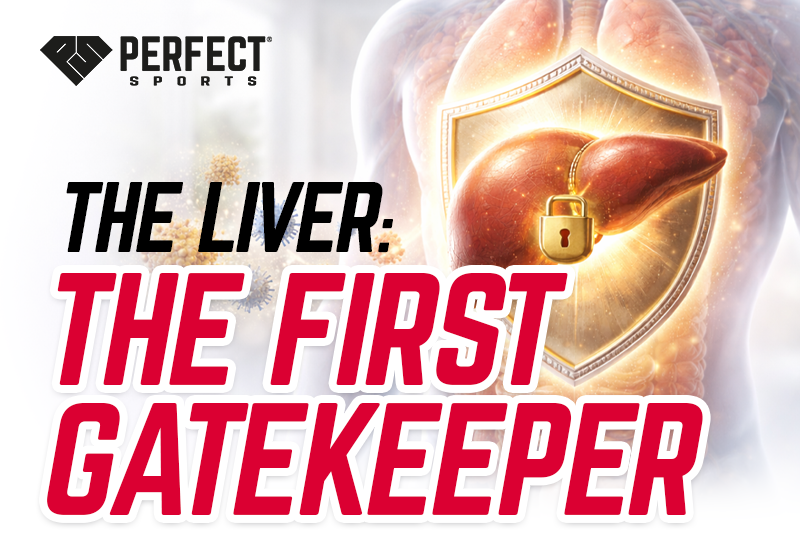
The Liver: The First Gatekeeper
Every meal passes through the liver first.
The liver regulates blood glucose, stores glycogen, and manages excess energy. When glycogen capacity is exceeded and demand is low, excess nutrients are converted into storage forms and transported to adipose (fat) deposits.
This explains why constant feeding, especially in the absence of training, often leads to fat gain over time, even when food choices are “clean.”
Hunger Is a Signal, Not a Problem.
This is where the most important mental shift occurs.
Hunger is commonly treated as something to avoid or suppress. In reality, hunger often signals that insulin levels have fallen, receptors are regaining sensitivity, and the body is becoming receptive again.
Hunger is not failure. Hunger is readiness.
It indicates that the system has reset and is prepared to use nutrients effectively at the next meal.


Why Eating Away Hunger Backfires
When hunger is immediately suppressed with frequent snacks or liquid calories, insulin never fully falls and receptor sensitivity never fully recovers.
Over time, this trains the body to expect constant input and to store nutrients more readily.
Allowing a 4-hour no-feeding window, combined with mindful awareness of hunger, retrains the body to direct nutrients toward lean tissue instead of bulk storage.
Protein Timing Meets Hunger Awareness
When a properly timed meal arrives after this reset:
- Insulin sensitivity is higher
- Muscle tissue is more receptive
- Nutrient partitioning is improved
Including high-quality, rapidly absorbed protein in each meal amplifies this effect. Muscle protein synthesis is stronger, recovery improves, and less energy is diverted toward fat storage.
Repeating this cycle consistently produces compounding results.


Why This Breakthrough Explains Past Frustration
For many people, this insight resolves years of confusion.
They were eating protein. They were training. They were trying to do everything right.
The issue was not effort, it was timing, spacing, and alignment with physiology.
Once training demand, meal spacing, hunger awareness, and protein quality work together, effort finally translates into progress.
What This Looks Like in Real Life
This is not a rigid meal plan. It is a framework:
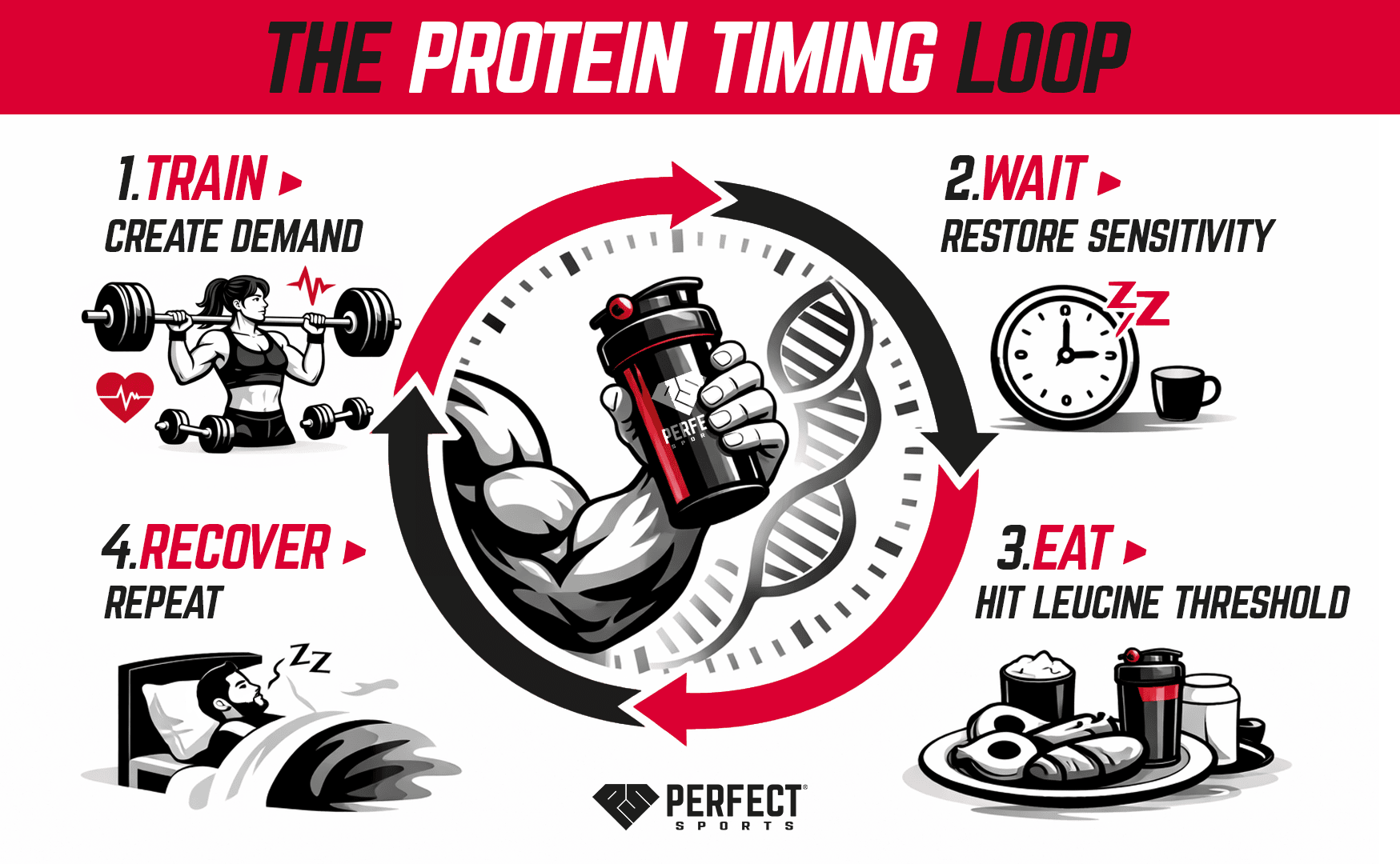
- Train to create demand
- Eat sufficient protein at each meal (min. 30 g protein per meal)
- Protein pre-loading solves this for any meal
- Allow space between meals (No snacking!)
- Pay attention to hunger as feedback
- Repeat consistently
This is where simplicity matters.
Hitting a meaningful protein dose at every meal is easy at lunch or dinner, but often more challenging at breakfast, around training, or during busy days. Rather than forcing constant snacking or oversized meals, some people use a simple protein pre-load, adding a fast, easily digested protein source alongside a meal, to ensure the leucine threshold is met without disrupting hunger signals or meal spacing.
The goal isn’t more feedings. It’s making each feeding count.
This approach supports muscle gain, fat loss, and long-term metabolic health.


Final Thoughts on the Effects of Protein Timing
Protein matters, but how your body receives it matters more.
When you stop fighting your physiology and start working with it, results become predictable.
That is the protein timing breakthrough that turns effort into results.
BE GREAT.
Featured Products

FAQs
References
- https://www.foundmyfitness.com/episodes/athletes-adults-protein-timing
- https://pmc.ncbi.nlm.nih.gov/articles/PMC6322793/
- https://link.springer.com/article/10.1186/s12970-017-0177-8
- https://pubmed.ncbi.nlm.nih.gov/26797090/
- https://pubmed.ncbi.nlm.nih.gov/18577776/
- https://examine.com/guides/protein-intake/
- https://www.sciencedirect.com/science/article/pii/S2666379123005402
- https://peterattiamd.com/protein-anabolic-responses/
- https://pmc.ncbi.nlm.nih.gov/articles/PMC3577439/
- https://pubmed.ncbi.nlm.nih.gov/12217881/
- https://pmc.ncbi.nlm.nih.gov/articles/PMC12555910/
- https://pmc.ncbi.nlm.nih.gov/articles/PMC12500579/
- https://pmc.ncbi.nlm.nih.gov/articles/PMC11165183/
- https://pmc.ncbi.nlm.nih.gov/articles/PMC3879660/
- https://www.nature.com/articles/s41467-023-41759-9
- https://pmc.ncbi.nlm.nih.gov/articles/PMC10994406/
- https://www.sciencedirect.com/science/article/pii/S0022316622021897

JAY BELL, SVP MKTG AND R&D, PERFECT SPORTS
Jason Bell is the Senior Vice President of Marketing and Research & Development at PERFECT Sports Canada Inc. With extensive experience spanning product development, regulatory strategy, and brand building, Jason helps bring high-performance, science-backed nutrition products to market across Canada and the United States.


